Every foldable phone shipped to date has the same problem. Run your finger across the center of a Samsung Galaxy Z Fold or a Google Pixel Fold and you will feel it: a subtle ridge where the display bends. Under certain lighting conditions, that crease is visible too, a faint line bisecting what is supposed to be one continuous screen. It is the defining compromise of the foldable category, and according to multiple reports, Apple intends to ship its first foldable iPhone without one.
Why Creases Happen
The crease in a foldable display is not a manufacturing defect. It is a consequence of physics. When you repeatedly bend a thin film of organic light-emitting material around a fixed point, the layers on the outside of the bend stretch while those on the inside compress. Over thousands of cycles, this differential stress creates a permanent deformation in the panel stack. The tighter the bend radius, the more pronounced the effect. Samsung has reduced its crease with each generation by widening the bend radius and using thinner substrate layers, but the fundamental problem remains: bend a display enough times and the fold point will show it.
Apple's Approach: Multiple Fronts
Patent filings reveal that Apple has been attacking the crease problem from several angles simultaneously. One family of patents describes a variable-tension hinge mechanism that distributes stress more evenly across the fold area rather than concentrating it at a single line. Instead of the display bending around a fixed axis, the hinge allows the bend point to shift slightly across a wider zone, spreading mechanical stress over a larger surface area. This is a fundamentally different approach from the hinges used in current Samsung and Google devices, which maintain a consistent fold axis.
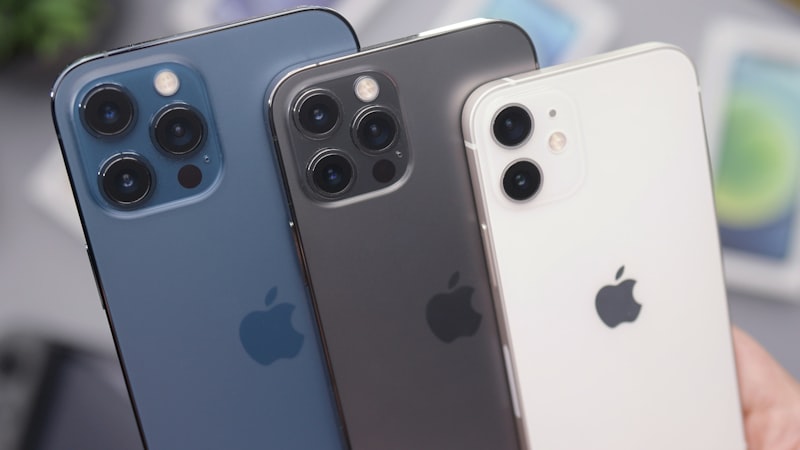
Foldable form factors are reshaping how we think about smartphones
A second line of patents addresses the display stack itself. Apple has filed for panel constructions using thinner polyimide substrates combined with novel adhesive layers that allow the various films in an OLED stack to slide minutely against each other during folding, rather than being rigidly bonded. This micro-slippage between layers would reduce the compressive and tensile forces that cause permanent creasing. It is an elegant solution, though manufacturing tolerances would need to be extremely tight.
Ultra-Thin Glass Enters the Picture
Samsung introduced ultra-thin glass as a cover layer on its foldable displays starting with the Galaxy Z Flip. The glass is approximately 30 micrometres thick, far thinner than the glass on a conventional smartphone, but it still provides a harder, more scratch-resistant surface than bare plastic film. Apple is reportedly working with both Corning and Schott on proprietary UTG formulations that are thinner still, potentially in the 20-25 micrometre range, with additional hardening treatments applied after the glass is drawn to its final thickness.
Thinner glass can bend to a tighter radius without shattering, which is critical for reducing the overall fold gap. A smaller fold gap means a thinner device when closed, and it also means less visible deformation at the fold point. If Apple can pair a superior hinge mechanism with a thinner, more resilient glass cover layer, the combined effect could be a fold that is genuinely invisible in normal use.
The Manufacturing Challenge
Eliminating the crease is as much a manufacturing problem as an engineering one. Even a perfect design produces inconsistent results if panel flatness, hinge tolerance, and adhesive curing are not controlled within very tight specifications. Apple has a long tr
Foldable form factors are reshaping how we think about smartphones
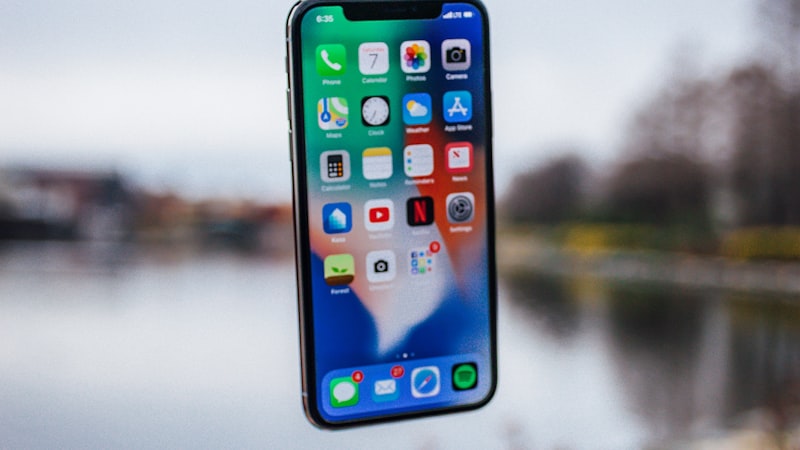
The next generation of iPhone hardware pushes the boundaries of mobile design
Whether the shipping product truly has zero visible crease or merely an imperceptible one remains to be seen. But the depth and breadth of Apple's engineering investment in this area suggests the company views crease elimination not as a nice-to-have but as a prerequisite for launch. If any company has the resources and supply chain leverage to solve it, Apple does.