Foldable iPhone and the Augmented Reality Opportunity
Foldable iPhone and the Augmented Reality Opportunity
The long-rumored foldable iPhone, expected to debut in late 2026, presents more than just a novel form factor. While much discussion has focused on display durability and hinge mechanisms, its potential impact on augmented reality (AR) experiences is significant and warrants careful consideration. Apple has consistently signaled its investment in AR, and the foldable iPhone could be the key to unlocking a more immersive and practical future for the technology.
Editor's pick: iPhone Pro Max cases & grips on Amazon → As an Amazon Associate, this site earns from qualifying purchases.
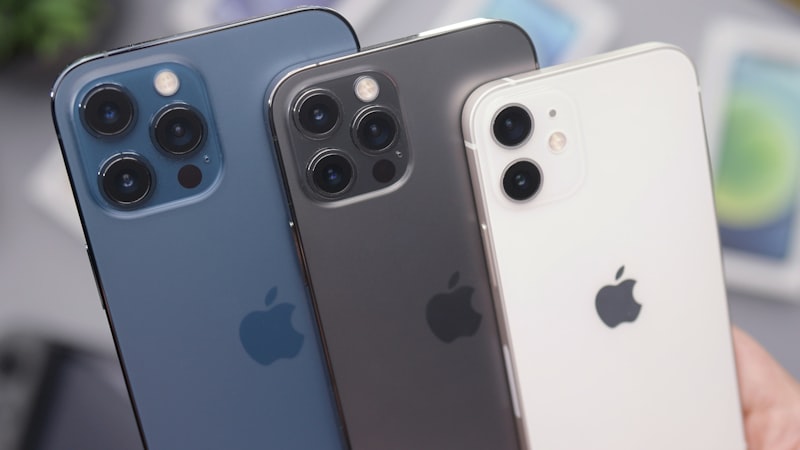
Currently, mobile AR experiences are constrained by the size and shape of standard smartphone displays. The limitations are twofold: a smaller screen restricts the field of view for AR overlays, making the experience feel cramped and less natural. Secondly, the single, fixed orientation of the screen limits the ways users can interact with AR content. The foldable iPhone, with its larger unfolded display area, directly addresses these limitations.
Increased Field of View and Immersion
A larger display area, achieved through the foldable design, will translate to a wider field of view for AR applications. This is crucial for creating a more believable and immersive AR experience. Imagine using an AR application for interior design. On a standard iPhone, the virtual furniture might only occupy a small portion of the screen, requiring constant panning and adjustments. A foldable iPhone, with its larger display, could allow users to visualize entire rooms and furniture arrangements more naturally, providing a more comprehensive and intuitive experience.
Beyond interior design, industries like education, engineering, and medicine could greatly benefit. Students could dissect virtual models with greater detail, engineers could visualize complex schematics at scale, and surgeons could practice procedures on virtual patients with improved realism. The increased screen real estate allows for more complex and detailed AR overlays, enhancing the utility and effectiveness of these applications. This increased real estate comes with its own challenges, however, as our team at iPhone View has previously covered the challenges of variable refresh rates and display uniformity across large OLED panels, issues Apple will need to address in their foldable design.
Enhanced Interaction and Spatial Awareness
The foldable form factor also introduces new possibilities for interaction with AR content. Users could hold the device in different configurations to manipulate virtual objects, access contextual menus, or even create a makeshift AR workspace. For instance, in a gaming scenario, the unfolded display could serve as a virtual battlefield, while the folded configuration could provide access to game controls and inventory management. This versatility would create a more dynamic and engaging AR experience.
Furthermore, the larger display could facilitate more accurate and reliable spatial awareness. AR applications rely heavily on computer vision and sensor data to map the surrounding environment. A wider field of view for the camera sensors, coupled with a larger display for visual feedback, could improve the accuracy and stability of AR tracking, reducing the likelihood of virtual objects drifting or misaligning with the real world.
Challenges and Considerations
While the potential benefits are significant, the foldable iPhone will need to overcome several challenges to fully realize its AR potential. The weight and bulk of the device could be a concern, as users might find it cumbersome to hold and manipulate for extended periods. The foldable design must also be durable enough to withstand the rigors of everyday use, as any fragility could undermine its appeal. The cost of the device is also a factor, as a high price point could limit its accessibility and adoption.
From a software perspective, Apple will need to optimize its ARKit framework and development tools to take full advantage of the foldable form factor. Developers will need to adapt their existing AR applications to support the larger display and the new interaction possibilities. This will require a concerted effort from Apple to provide clear guidelines and resources to developers.
The Future of Mobile AR
The foldable iPhone represents a significant step forward in the evolution of mobile AR. By addressing the limitations of standard smartphone displays, it has the potential to unlock a new level of immersion, interaction, and utility for AR applications. While challenges remain, the benefits are undeniable, and the foldable iPhone could play a pivotal role in shaping the future of augmented reality. The design itself is a significant departure, and as the team at iPhone Arc has documented, Apple has a long history of iterative design evolution; the foldable iPhone represents a more radical shift.