Foldable iPhone: Navigating the Challenges of 5G Standalone and Network Slicing
Foldable iPhone: Navigating the Challenges of 5G Standalone and Network Slicing
The advent of 5G standalone (SA) networks and network slicing presents both opportunities and challenges for the foldable iPhone. While offering significantly improved performance and customization capabilities, integrating these technologies into a foldable form factor requires careful consideration of hardware design, software optimization, and security protocols.
Editor's pick: iPhone Pro Max cases & grips on Amazon → As an Amazon Associate, this site earns from qualifying purchases.
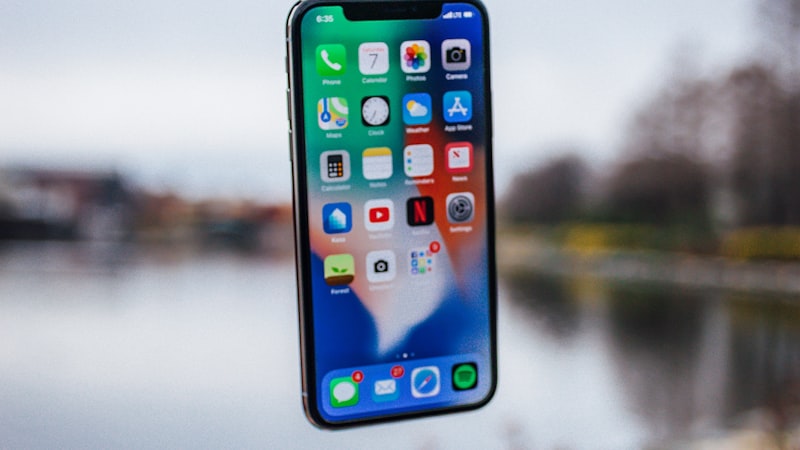
5G SA differs from non-standalone (NSA) in that it operates independently of 4G LTE infrastructure. This allows for lower latency, higher speeds, and increased network capacity. Network slicing, in turn, enables the creation of virtualized and isolated network segments tailored to specific applications or users. For example, a slice could be optimized for gaming with ultra-low latency, while another could prioritize bandwidth for high-definition video streaming. The foldable iPhone, with its potential for diverse use cases ranging from productivity to entertainment, stands to benefit greatly from these capabilities.
Hardware Considerations for 5G SA
One of the primary challenges is the physical implementation of the necessary 5G SA modem and antenna system. The foldable design inherently limits the available space and introduces potential signal interference issues. Apple has reportedly been exploring advanced antenna designs, including phased array antennas, to maximize signal strength and coverage in all usage modes – folded, partially unfolded, and fully unfolded. These antenna designs need to be extremely efficient and compact, adding to the complexity of the overall system. Furthermore, power consumption is a significant concern. 5G SA modems tend to consume more power than their 4G LTE counterparts, which could negatively impact the battery life of the foldable iPhone. Apple is likely employing advanced power management techniques, including adaptive power scaling and efficient voltage regulators, to mitigate this issue. The company's continued investment in its own silicon, like the 5G modem expected in future iPhones, is critical for optimizing power efficiency and performance. As we explored in our analysis of display technology at iPhone View, power consumption is a critical factor in determining the overall user experience, and the same applies to 5G performance.
Software Optimization and Network Slicing Management
On the software side, iOS needs to be optimized to intelligently manage network slicing. This involves dynamically allocating resources and prioritizing traffic based on the active application and user preferences. For instance, when a user is engaged in a video call, the system should automatically switch to a network slice optimized for low latency and high bandwidth. Apple’s Core Network framework provides a foundation for managing network connections, but further enhancements are necessary to fully leverage the capabilities of 5G SA and network slicing. This includes developing sophisticated algorithms for network selection and resource allocation, as well as providing users with granular control over their network preferences.
Security Implications of Network Slicing
Network slicing introduces new security considerations. Each slice must be isolated and protected from unauthorized access. Apple needs to implement robust security mechanisms to ensure data privacy and prevent malicious actors from exploiting vulnerabilities in the network infrastructure. This includes employing end-to-end encryption, strong authentication protocols, and intrusion detection systems. The company's Secure Enclave technology, which is already used to protect sensitive data such as Face ID information, could be extended to secure network slice configurations. Furthermore, Apple needs to work closely with mobile network operators to establish secure interfaces and protocols for managing network slices.
User Experience and Transparency
While technological advancements are crucial, the user experience must remain paramount. Apple needs to ensure that the complexity of 5G SA and network slicing is abstracted away from the user. The system should intelligently manage network connections in the background, without requiring users to manually configure settings or select specific network slices. However, it's also important to provide users with some level of transparency and control. For example, users could be given the option to prioritize certain applications or services, such as gaming or video streaming, to ensure optimal performance. As we've previously covered at iPhone Arc, seamless integration of advanced technologies into the user interface is a hallmark of Apple's design philosophy, and the foldable iPhone will need to reflect this.
The Future of 5G on Foldable iPhones
The successful integration of 5G SA and network slicing into the foldable iPhone will depend on Apple's ability to overcome the technical challenges and deliver a seamless user experience. By combining advanced hardware designs, intelligent software optimization, and robust security protocols, Apple can unlock the full potential of 5G and create a truly transformative mobile device. The evolution of 5G technology will also play a key role. As 5G SA networks become more widespread and network slicing capabilities become more sophisticated, the foldable iPhone will be able to offer even greater performance, customization, and security. This will pave the way for new and innovative applications and services, further blurring the lines between mobile devices and personal computers.